Super Bowl Halftime Show Production Costs That Would Shock Most Taxpayers
Most Americans see twelve or thirteen minutes of music, lights, dancers, smoke, cameras, and a stage that seems to appear from nowhere. The Super Bowl halftime show turns that tiny window into a national event, and the production costs behind it can run into eight figures before the first note lands. That number shocks people because the headliner usually does not receive a giant appearance fee. The money goes into the machinery around the artist: the rolling stage, broadcast timing, labor, rehearsals, insurance, travel, security coordination, and a sponsor system built for one of the largest TV audiences in the country. For readers who follow media cost conversations, the real story is not only “how much did the show cost?” It is who gains, who pays around the edges, and why a private entertainment spectacle can still make local taxpayers feel involved. The answer is messier than a viral post. The NFL halftime show is a private media prize, but the Super Bowl itself pulls police, transit, sanitation, traffic control, and civic planning into the bill.
What the Price Tag Is Actually Buying
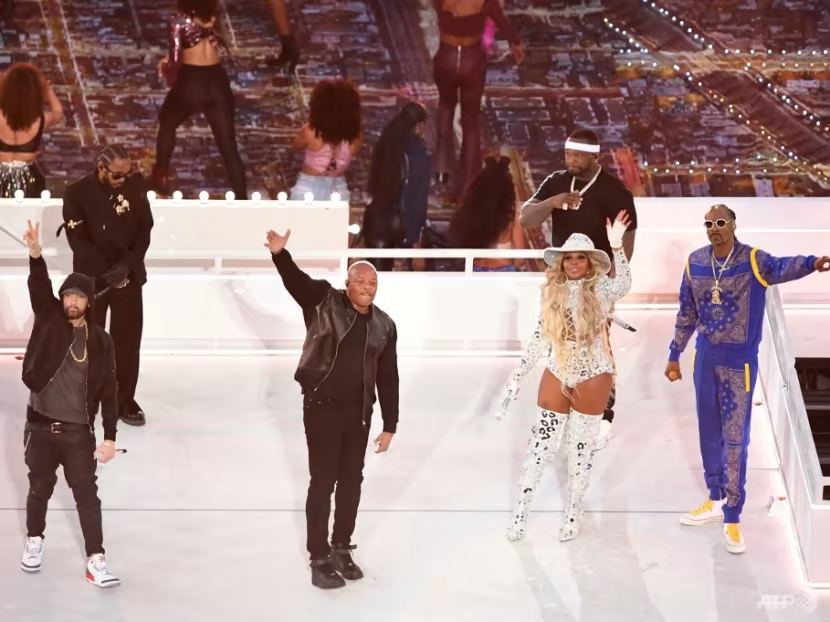
A halftime show looks like a concert, but it behaves more like a military drill with guitars. A normal arena tour can take hours to load in. At the Super Bowl, crews get a few minutes to move the stage onto the field, lock it, wire it, light it, clear it, and protect the playing surface. That pressure changes the bill. You are not paying for a singer to stand at midfield. You are paying for a temporary city of specialists to make a live broadcast look effortless.
The counterintuitive part is that the smallest thing on screen can be the costliest thing to control. A platform that rises six inches has to pass safety checks. A camera path has to avoid dancers, cables, athletes, and field marks. A spotlight needs a backup plan. A prop that looks simple at home may need weeks of testing because it cannot fail in front of more than 100 million U.S. viewers.
The stage is built for seconds, not songs
The stadium production budget starts long before game week. Designers build around the artist’s story, the network’s camera needs, the NFL’s field rules, and the sponsor’s brand exposure. A regular concert stage can stay bolted down for the night. This one has to roll in, perform, and vanish before the third quarter starts.
That short timeline pushes crews toward custom fabrication. Modular decks, carts, hidden wheels, cable channels, generator plans, backup microphones, and field protection all have to work as one machine. The NFL halftime show depends on people the camera never thanks: riggers, carpenters, electricians, choreographers, broadcast engineers, field managers, union crews, and safety leads.
Think about the 2020 Shakira and Jennifer Lopez show in Miami. It felt loose and bright on TV, but its reported price sat around $13 million. The audience saw a dance-heavy celebration. Behind it sat rehearsals, staging, lighting, band coordination, child performers, costume planning, sound routing, and broadcast direction. The sparkle was the cheap part. Precision cost the money.
Field protection alone can surprise people. The stage has to cross grass or turf that two NFL teams still need after halftime. Wheels, mats, weight loads, and cart paths all get argued over because one rut can turn into a football problem. That is why the build can feel over-engineered. It has to protect the concert and the game.
The star fee is not the big line item
The public often assumes the famous artist takes the largest check. That is usually wrong. Super Bowl headliners are known for receiving no standard appearance fee, beyond union-scale pay and covered expenses. That sounds unfair until you see the trade. The artist receives a once-a-year marketing blast that no album campaign can buy cleanly.
That does not mean the performance is cheap. The absence of a massive artist fee can make the remaining bill look stranger. Instead of a celebrity paycheck, the money flows toward the build. Crews still need wages. Dancers need pay. Rehearsal rooms need rentals. Flights, hotels, local transport, security plans, wardrobe, music direction, pyrotechnic approvals, and insurance still land somewhere.
The Weeknd reportedly added millions of his own money to shape his 2021 performance. That detail matters because it shows how prestige can bend the economics. An artist may accept a low direct fee, then spend personal or label-backed funds to raise the visual standard. The show becomes a brand investment dressed as entertainment.
Why Super Bowl Halftime Show Production Costs Feel Bigger Than the Clock Suggests
The shock comes from the ratio. Tens of millions of dollars can attach to a performance shorter than a lunch break. That sounds absurd until you price the risk. A stadium concert can hide a lighting delay. A Super Bowl broadcast cannot. The clock, the field, the network, the teams, and the sponsor all demand the same thing: no mistake that changes the game.
This is where the Super Bowl halftime show separates itself from music awards, festivals, and tours. It has to serve the stadium crowd, the TV viewer, the streaming clip, the sponsor recap, and the next morning’s news cycle at once. One show has five audiences. Each audience adds a cost.
Live broadcast risk makes everything more expensive
A live broadcast punishes weak planning. If a microphone fails, social media notices before the singer reaches the next lyric. If the stage takes too long to exit, coaches get angry. If a dancer slips near a cart path, safety becomes the story. That threat raises the price of preparation.
Redundancy becomes normal. You need backup audio paths, backup power plans, extra stagehands, secondary cues, spare wardrobe pieces, and medical response on standby. The average viewer sees confidence. The producer sees a list of ways the night could break.
Weather adds another layer, even in cities known for mild conditions. Wind can change how fabric, smoke, drones, banners, or aerial camera lines behave. Rain changes footing. Cold changes instruments and hands. A good plan does not assume a perfect night. It prices the ugly version, then hopes viewers never notice.
The non-obvious insight is that money often buys calm. The best halftime crew is not the one making the flashiest stage. It is the one that keeps thousands of moving parts from creating one ugly headline. That is why a stadium production budget can look bloated from the couch and still feel tight to the people carrying the risk.
Rehearsal time is where the hidden bill grows
The main show may last minutes, but the work stretches across months. Choreography gets revised. Camera shots get mapped. Field movement gets timed with stopwatches. Guest appearances, costume changes, and music edits create fresh problems every time someone adds a new idea.
Labor rules matter here. Dancers and performers have pushed for better treatment because rehearsal-heavy televised events can swallow time without looking like a traditional job. SAG-AFTRA’s 2025 Network Television Code update notes a pay change for dancers on the Super Bowl Halftime Show, tying them more closely to higher-paying awards-program treatment. That is not trivia. It is a sign that the glamour economy still runs on paid human labor.
For a U.S. taxpayer, that point should land. The money is not only fireworks and celebrity styling. It is also payroll for skilled workers in a compressed, high-stakes setting. The question is not whether people should be paid. They should. The better question is why the public often hears the giant number without seeing the workers inside it.
The Taxpayer Question Nobody Should Wave Away
Here is where the argument gets slippery. The NFL does not usually hand a city a bill for the halftime stage and ask residents to cover the confetti. That claim would be too simple. Yet taxpayers can still sit close to the cost structure because the Super Bowl brings public obligations that do not vanish when a sponsor pays for the show.
Host cities prepare for crowds, traffic, street closures, police overtime, emergency medical coverage, sanitation, airport pressure, transit planning, and civic events. Some of those expenses bring new tax revenue. Some get reimbursed. Some become political arguments after the cameras leave. The halftime show rides inside that larger machine.
The public does not pay for every spotlight, but it supports the event around it
A taxpayer may never pay for a headset microphone, but public agencies help keep the event possible. Police departments manage crowd zones. Fire officials inspect temporary structures. Transit staff handle spikes. Street crews clean up fan areas. Local governments negotiate access, permits, and security responsibilities.
That distinction matters because sloppy criticism can miss the truth. Saying “taxpayers pay for the halftime show” overstates the direct case. Saying “taxpayers have no stake in this spectacle” understates the civic burden. The honest middle is less catchy and more useful.
Residents also feel the event in ways that never show up in a halftime recap. A downtown worker may face rerouted buses. A small business near a security zone may gain customers one day and lose regular foot traffic the next. A city employee may work overtime because a fan festival needs support. Those are not stage charges, but they are part of the same civic footprint.
Glendale, Arizona, became a common example in debates about hosting because reports and academic commentary have pointed to local costs from the 2015 game landing in the high six figures to low seven figures. That does not prove every host city loses money. It proves that the public bill deserves daylight before mayors promise a tourism jackpot.
The stadium deal can matter more than the stage
The louder taxpayer story may sit far away from the singer. Stadium construction, maintenance, upgrades, policing, and event districts often create deeper public exposure than one halftime set. A city can argue about a $12 million show, then ignore hundreds of millions tied to stadium finance over many years. That is where the debate gets backward.
A halftime stage makes the issue visible because it looks extravagant. A bond payment does not. A public safety staffing plan does not. A tax district does not. Yet those quieter costs can shape local budgets long after the last encore. For readers comparing sports business stories, a stadium funding and public money guide can make the bigger pattern easier to follow.
The counterintuitive takeaway is that the show may be a distraction from the larger public finance question. You notice the dancers. You miss the contract. You notice the fireworks. You miss the operating agreement. The expensive image on TV is not always the deepest cost in the city ledger.
Why Brands, Artists, and Cities Still Say Yes
If the math feels uncomfortable, why does everyone keep lining up? Because the Super Bowl sells attention at a scale America rarely gathers anymore. Broadcast audiences have split across streaming apps, social platforms, gaming, podcasts, and short video. The NFL remains one of the few places where advertisers, artists, and cities can still find a shared national room.
Apple Music reportedly agreed to pay around $50 million a year for the halftime title sponsorship. That figure says more than “big company spends big money.” It tells you the halftime slot is not a break in the game. It is a media product with its own value, its own audience, and its own afterlife on clips, playlists, interviews, and social feeds.
The sponsor buys cultural ownership, not a commercial slot
A normal ad ends after thirty seconds. The halftime sponsor gets weeks of buildup, the press conference, the artist announcement, the live show, the replay, the playlist, and the Monday debate. That is why the sponsorship can command a number that looks wild beside the runtime.
The sponsor wants to stand next to the memory. When people say “the Rihanna halftime show” or “the Kendrick Lamar halftime show,” the title sponsor sits nearby in the official name, thumbnails, press assets, and streaming hubs. That association has value because it feels less like an ad and more like culture.
For marketers, the lesson goes beyond football. Attention is expensive when trust is thin. A sponsor can buy impressions across the web, but it cannot easily buy a shared U.S. conversation. The Super Bowl halftime stage offers that rare thing. For a deeper business angle, see this sports sponsorship strategy explainer.
Artists trade a paycheck for the biggest shop window in America
A top artist could earn a large fee elsewhere, so the no-fee model sounds strange. Yet the NFL halftime show can lift streams, catalog sales, tour demand, brand deals, and cultural standing. The artist is not working for free in a simple sense. The payment arrives through market heat.
This deal does not fit every performer. Some artists reject it because the politics feel heavy, the control feels tight, or the risk feels too high. Others see the value. A clean performance can reset a career chapter, introduce older songs to younger fans, or turn a new album era into a national moment.
Cities say yes for a similar reason. They want hotel bookings, restaurant traffic, airport spending, media attention, and civic status. The danger is overselling the return. A smart city treats the Super Bowl as a high-cost bid for attention, not a magic payday. The same logic applies to the stadium production budget: spend because the return is clear, not because the spotlight feels flattering.
A better public test would ask what the city gets after the broadcast trucks leave. Did hotels fill at higher rates without pushing out normal visitors? Did local workers gain paid shifts, or did national vendors capture most of the spending? Did the city publish a clean after-action report? The answer should be measured, not cheered by press release. That is the less flashy, smarter way to judge the bargain.
Conclusion
The sticker shock is real, but the better story is not a simple rant about celebrities and fireworks. The Super Bowl halftime show is a pressure machine that turns labor, risk, brand power, broadcast control, and civic support into a few minutes of national attention. That is why production costs can look absurd from a living room and still make sense to the people guarding the clock. The taxpayer concern belongs in the conversation, but it should aim at the full event structure, not only the stage. Public money often hides in police plans, stadium deals, street closures, and long-term civic promises. Private sponsors may fund the spectacle, while local governments carry part of the surrounding weight. That split deserves more honest talk. Before the next show begins, watch the first rolling platform hit the field and ask a sharper question: who paid for the part I can see, and who paid for the part I was never shown?
Frequently Asked Questions
How much does the Super Bowl halftime show usually cost?
Recent estimates often place the show in the eight-figure range, though the exact number changes by artist, stage design, location, labor needs, and sponsor plans. The largest expenses usually sit in staging, crews, rehearsals, broadcast systems, travel, safety planning, and fast field setup.
Do Super Bowl halftime performers get paid by the NFL?
Headliners usually do not receive a standard appearance fee from the NFL. They may receive union-scale compensation and covered expenses. The larger payoff often comes later through music streams, catalog sales, tour demand, brand visibility, and cultural attention.
Do taxpayers pay for the Super Bowl halftime show?
Taxpayers do not usually pay directly for the halftime stage, lights, or artist concept. They may help fund public services around the wider Super Bowl, such as policing, traffic control, emergency response, sanitation, permits, and transit planning.
Why is the NFL halftime show so expensive if it lasts only minutes?
The short runtime creates the expense. Crews must build and remove a custom stage on a live football field with tight safety, timing, and broadcast demands. Months of planning sit behind a performance that viewers see for minutes.
Who pays for the Super Bowl halftime stage?
The NFL, sponsors, production partners, and related commercial agreements usually support the stage and show build. Exact arrangements can vary by year. Artists or labels may also add money when they want a larger creative concept than the base plan supports.
Why would an artist perform without a big appearance fee?
The audience is the prize. A strong performance can drive streaming spikes, revive older hits, sell tour tickets, boost merchandise, and reshape public image. For a major artist, that exposure can outweigh one private concert fee.
Is hosting the Super Bowl profitable for a city?
Some businesses benefit, especially hotels, restaurants, bars, rideshare drivers, and event vendors. The citywide return is harder to prove because public service costs, security needs, and displaced local activity can reduce the net gain.
What is the biggest hidden cost behind the halftime show?
Labor and risk control are often less visible than props or fireworks. Rehearsals, safety checks, backup systems, technical crews, field protection, and broadcast planning can swallow large sums because one failure can damage the game, the show, and the host brand.